I was 13. Barely into middle school, and struggling to figure out who I would become.
On top of the usual early teen troubles, one of my best friends moved to another state not far into the fall semester of seventh grade. I was devastated. Much of my time was spent struggling to figure out school sports, and puberty, and the navigation of cliques. I had friends from church, but they attended a different school, so I felt mostly alone. That first semester was mostly awful. Awkward. And, unbeknownst to me, pushing me into a new time of life. A new challenge and different struggles.
January of 2000 brought the fear of the ‘Y2K’. Anyone alive at the time remembers the widespread panic and anticipation for New Year’s Eve. We spent the evening at my Grandparent’s house in the country. My grandparents had stocked up on supplies and were prepared for the chaos. They had a wind turbine/generator well before they became a popular site around the state. Luckily, nothing catastrophic happened, as the clock turned up midnight, and we progressed into the new year without too much fanfare.
It seemed the danger had passed, but not long into the new year I was stricken with an illness. Mom and Dad traveled to Wichita to visit Dad’s endocrinologist. They were only gone about 24 hours, but it was 24 hours that I found myself in a downward spiral.
At that time, my Dad had been diabetic for less than ten years. He and Mom had dived into his diagnosis with gusto. Not long after his diagnosis they found themselves co-chairs of the local chapter of the American Diabetes Association’s support group. My Aunt had been a diabetic since childhood, and my Grandpa was also recently diagnosed, so the disease was not necessarily an unknown challenge for him.
All four of us girls used to travel to the hospital with them a couple of times a month and spend an hour or two coloring, reading and (mostly) keeping quiet while they worked with diabetics of all ages. They learned, they shared, and they also planned fundraising events. They worked on learning about food, and alternative care. What they hadn’t anticipated doing, was educating their oldest daughter on the symptoms and warning signs of a disease that was prone to striking children.
Frequent urination. Exhaustion. Weight loss. Drinking lots of water.
All of these things are signs of Type 1 Diabetes.
So, it wasn’t until the day my Dad left for his quarterly doctor’s visit that it struck me that I was exhibiting some signs of the disease. I spent the day of their return in a state of utter panic. I couldn’t let my grandparents know what I was afraid of, because I was too afraid of being right. Deep down I knew it was more than a cold. Deep down I knew that my life was about to change forever.
Mom and Dad arrived home late that evening. All of us girls were supposed to be in bed.
Terrified, I got up for some water, and to use the restroom. A sore throat had set in along with exhaustion in the prior days, and I greeted Mom and Dad at the door. I don’t remember exactly how it happened, but I do remember collapsing into tears over my fears. They assured me I was probably overreacting, but that we’d check my blood sugar, just to make sure.
I was no stranger to a finger stick. In the years since Dad was diagnosed we participated in a study at the clinic my Dad frequented in Wichita. They were observing children of adults with the disease. The first step was to do a blood test, looking for antibodies… to what? I have no idea. But my sisters all passed the test. I got held up and made it to round two. Round two consisted of drinking a sugar solution and getting your sugar level tested. Looking back, it was quite similar to the test they do for gestational diabetes. Luckily, I passed round two and got booted from the study before it kicked into high gear, but I do recall lots of pricks and pokes, so that was nothing new.
Dad got out his meter and a clean lancet and we tested my sugar. Somewhere in the 300’s, my sugar was very high, but not enough to warrant a trip to the ER since I wasn’t exhibiting dangerous symptoms. I remember Dad pulling me into his lap as I cried. He and Mom somehow held it together while our world came crashing down around us. We stayed up fairly late talking about what the next day might bring.
Early the next morning Mom made an appointment at our pediatrician. My sisters went to school. Dad met us at the doctor for a blood test.
The a1c test confirmed our fears. I was in the early stages of diabetes. Most children diagnosed with the disease end up in ICU for a couple of days, but my early education saved me from the worst. We sat down with a nurse at the hospital who walked me through giving myself an injection. I remember practicing on an orange. I learned to mix insulin, test my sugar, test for ketones in my urine, as well as how to recognize and treat a low blood sugar.
It was a big day, but lucky/unlucky for me, I was also diagnosed with strep throat, so they put me on antibiotics and wouldn’t let me go back to school right away. Having perfect attendance, or close to it, was always a goal of mine, so I was particularly devastated to be kept from school. But, learning to control my new disease was very important.
After two days at home a classmate got worried and called to find out if I was okay. They’d heard rumors that I was very sick. This friend brought homework to me so I could catch up, and looked forward to my return to school. I don’t think she knows to this day that her support was the single best thing that happened to me in that time. Someone cared. Someone noticed.
My return to school was somewhat like that of a celebrity. An absence and then return with all kinds of equipment, and a strict regimen of nurses visits, along with snacks and shots, was something of a novelty for the kids in my class. I remember trying to explain things to friends and acquaintances, but I never really felt like they understood. The worst part was getting all of the stories about grandparents who had legs and feet amputated, or went blind. Let me tell you… that’s the single worst thing you can greet a newly diagnosed Type 1 diabetic with, the exact opposite of a success story, and likely the story of a Type 2 diabetic at that!
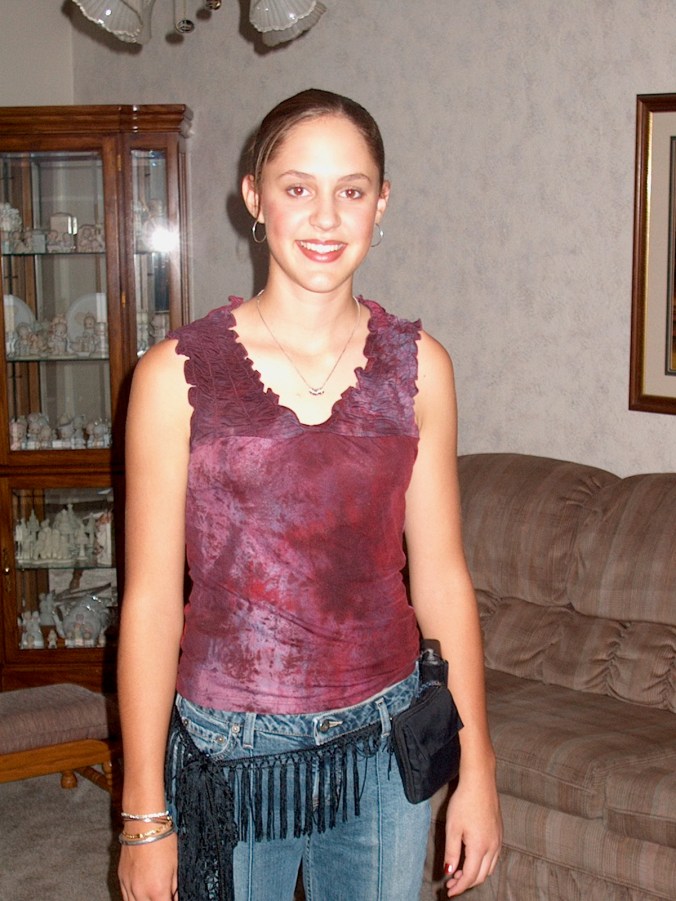
An evening at the homecoming dance didn’t even allow a reprieve from diabetes. As a teen I usually wore my pump and supplies at my waist. It wasn’t exactly cool to copy the style of a middle-aged Dad, but it wasn’t exactly avoidable unless I wanted to wear a purse 24/7.
So, what brings me to this story today? It’s been just over 19 years since my diagnosis. February 8th is a day I’ll always remember. It’s a day to celebrate, to mourn, and to ask God for another year of good health. I must admit, I am not usually one to notate special days on the calendar. I try hard to remember birthdays, but I rarely note the date of “terrible” events. I can’t tell you when my Grandma passed, but I know it was July. I also have started to forget what date my dog passed, even though it was such a short time ago. But, I prefer not to mark these dates.
I CHOOSE to remember my diagnosis.
It’s the date my life changed forever.
It’s the date that put me on the path to meeting my husband.
It’s the date that would cause me to consider adoption as a future option for building a family. People think it was a recent development, but it actually happened long before I married a fellow Type 1.
It’s a date that really marked a transformation in my life. It’s the first time I had to become fully and completely reliant upon God.
A few years before I was diagnosed, Philippians 4:13 became my battle cry. I could say that I’m not sure exactly why, but I’d be lying. I know He gave me the verse just before I’d need it most.
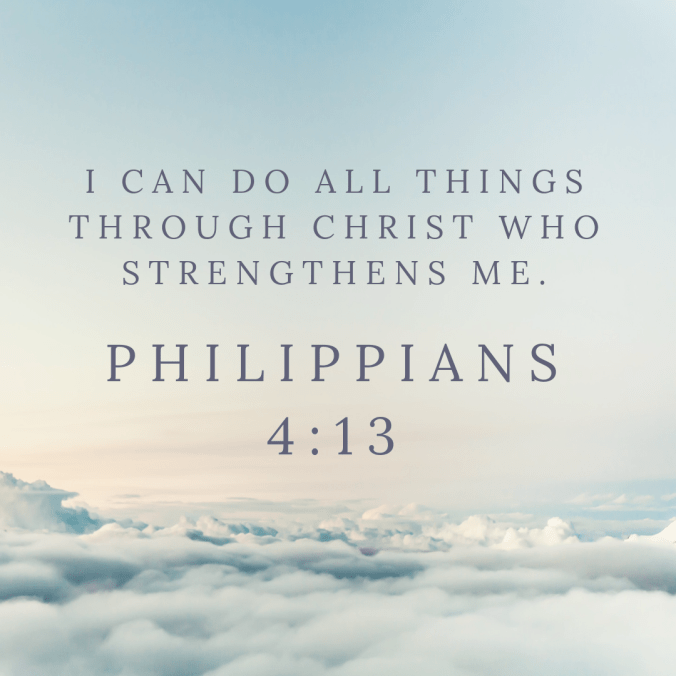
When the disease beats me down, He lifts me up.
When I realize that no amount of control-freak attitude and determination is going to keep my blood sugars under 200? He reminds me that we have grace to save us.
When I’m struggling to get my butt up off the couch and do a little exercise to counteract the hot chocolate I just downed? He reminds me that a little insulin will help, and that perfection isn’t attainable on this earth. So stressing out over it isn’t going to help matters in the slightest.
As I wrote this post I went looking for pictures specific to my disease. I found none, and yet every picture depicts the disease. It’s simply a part of me. I’ll leave you with this picture from a day I spent in the hospital for a clinical trial appointment. A day I felt particularly proud to be a diabetic. Helping doctors and drug companies conduct research has become another important part of who I am. Maybe some day we’ll have a cure, but for now we’ve got an amazing amount of drugs, equipment, and technology that have helped me live nearly twenty years with minimal signs of damage from this disease. 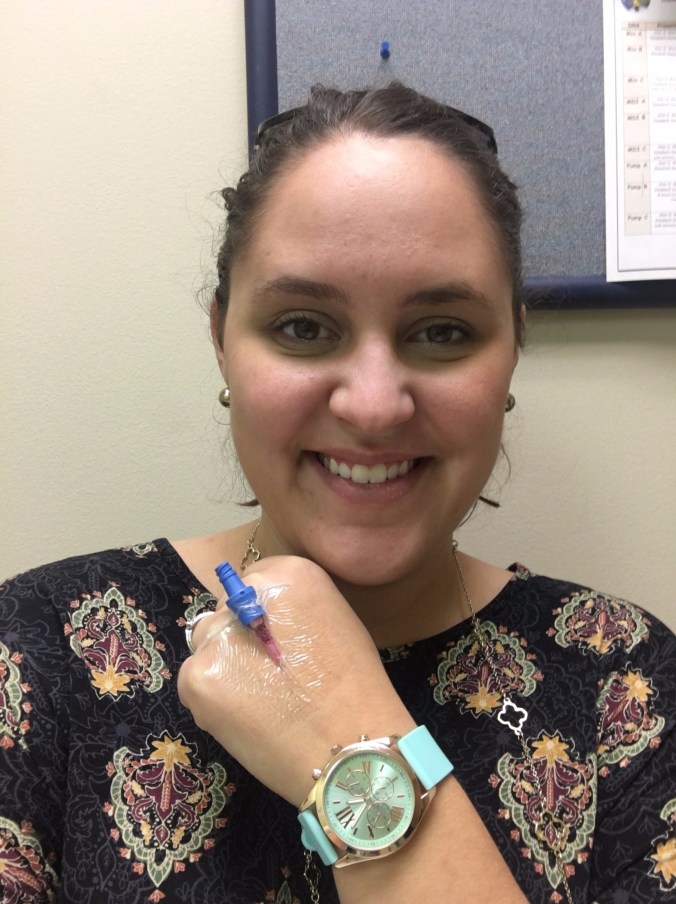


 Down on the Creek